
E-Commerce Development
Shopify, WooCommerce, Magento, and headless commerce builds optimised for conversion, not just checkout functionality.
- Platform matched to catalogue size, team, and margins
- Page speed treated as a commercial metric
- Checkout friction reduced with costs shown early
- Local payment methods supported per market

- Shopify
- WooCommerce
- Magento
- Next.js
- Stripe
- PayPal
- Razorpay
- 90+
- Target PageSpeed score
- Multi
- Payment methods per market
- 6-16 wk
- Typical build
What E-Commerce development covers
A store that takes payments is not the same as a store that sells. The functional build is the straightforward part; the difference between a mediocre and a strong store is almost always in product discovery, page speed, and checkout friction.
Platform chosen on catalogue and team
Shopify suits most merchants: hosted, secure, excellent checkout, and a large app ecosystem. WooCommerce suits content-led businesses already on WordPress that need flexibility. Magento suits large catalogues with complex B2B pricing and a team to operate it. The wrong platform choice is expensive to reverse, so we make it on your catalogue size, team capability, and margin structure.
Speed is revenue on commerce sites
Conversion is measurably sensitive to load time, and commerce sites accumulate weight quickly through apps, tracking scripts, and unoptimised imagery. We budget page weight, audit app impact, and treat performance as a commercial metric rather than a technical one.
Checkout friction is where revenue leaks
Forced account creation, surprise shipping costs, limited payment options, and long forms all cost completed orders. We reduce steps, show costs early, and support the payment methods your market actually uses.
Operations matter as much as the storefront
Inventory sync, order routing, returns, and accounting integration determine whether growth is manageable. A store that sells well but cannot fulfil cleanly creates a worse problem than slow sales.
Where E-Commerce development makes the difference
The challenges we hear most often — and how we address each one.
Slow pages lose sales
Performance-first builds and image optimisation keep stores fast on mobile.
Checkout abandonment is high
Simplified checkout, local payment methods, and trust signals reduce drop-off.
Managing products is painful
Clean catalogue structures, bulk tools, and integrations save hours each week.
Stores cannot handle traffic spikes
Scalable hosting and caching keep sales running during peaks.
Our E-Commerce development services
Each service has its own page covering scope, process, deliverables, and pricing tiers.
Marketplace Development
Multi-vendor marketplace platforms with vendor onboarding, split payments, commission handling, and dispute workflows.
Learn morePayment Gateway Integration
Payment gateway and local method integration with fraud controls, retries, and reconciliation handled properly.
Learn moreHeadless Commerce
Decoupled commerce with a Next.js storefront over Shopify or a commerce API, for maximum speed and multi-channel selling.
Learn moreMagento Development
Adobe Commerce and Magento Open Source builds for large catalogues, complex pricing, and B2B commerce.
Learn moreWooCommerce Development
WooCommerce stores for content-led businesses already on WordPress, with performance and security handled properly.
Learn moreShopify Development
Custom Shopify themes, apps, and Plus builds — hosted commerce with the best checkout in the market.
Learn moreWhat we deliver
Key features and capabilities of our E-Commerce development work.
Store design & build
Storefronts designed around product discovery and conversion.
Product & catalogue structure
Categories, variants, and filtering modelled for findability.
Payment gateway integration
Local and international methods with fraud controls.
Performance optimisation
Weight budgeting and app impact auditing.
Operations integration
Inventory, fulfilment, returns, and accounting connected.
How the engagement runs
A clear sequence with a visible output at every step — so you always know where the project stands.
- 01
Discovery & scoping
We map requirements, users, integrations, and constraints, then agree scope and a fixed quote before work starts.
- 02
Architecture & design
Technical architecture and user flows are agreed and prototyped before implementation begins.
- 03
Build & review
Development in reviewable increments, with a staging environment you can see and comment on throughout.
- 04
Launch & support
Performance and security checks, documented handover, deployment, and an agreed support window after go-live.
Technologies & tools
Chosen per project for fit, maintainability, and your existing stack.
- Shopify
- WooCommerce
- Magento
- Next.js
- Stripe
- PayPal
- Razorpay
Industry applications
Sectors where we most often apply this service.
- E-Commerce & Retail
- SaaS & Technology
- Healthcare
- Real Estate
- Finance & FinTech
- Education
- Travel & Hospitality
- Professional Services
What's included at each level
Every engagement is scoped to your needs; these tiers show how scope typically grows.
| What's included | Starter | Growth | Enterprise |
|---|---|---|---|
| Platform recommendation & scope | Included | Included | Included |
| Store design & build | Included | Included | Included |
| Payment gateway integration | Included | Included | Included |
| Performance optimisation | Not included | Included | Included |
| Inventory & fulfilment integration | Not included | Included | Included |
| Headless commerce architecture | Not included | Not included | Included |
| Ongoing CRO programme | Not included | Not included | Included |
Delivered projects using this service
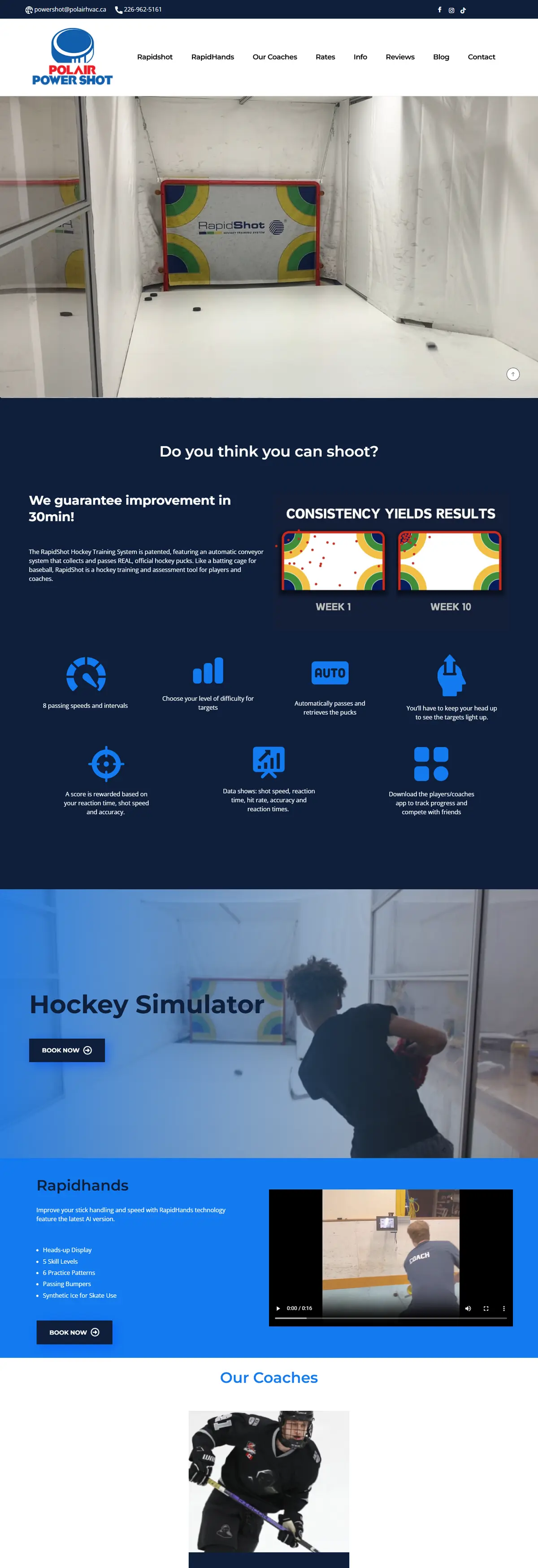
Polair Power Shot
Booking-focused website for a hockey shooting and stick-handling training centre, with programmes, coaches, and online purchases.
- WordPress
- WooCommerce
- Elementor
- Contact Form 7

Mudita Traders
WooCommerce store for a Mumbai manufacturer of hand-poured soy wax and designer candles, with category browsing and WhatsApp ordering.
- WordPress
- WooCommerce
- Elementor
- WoodMart theme
E-Commerce Development: common questions
Which platform should we choose?
Shopify for most merchants — hosted, secure, and excellent at checkout. WooCommerce if you are content-led on WordPress and need flexibility. Magento for large catalogues with complex B2B pricing and a team to run it. We decide on catalogue, team, and margins rather than preference.
How do we improve conversion rate?
Usually through speed and checkout friction before anything else. Faster pages, fewer steps, shipping costs shown early, and the payment methods your market expects typically outperform redesigns.
Can you migrate our existing store?
Yes. Products, customers, orders, and URLs are migrated with redirect mapping so search rankings survive. Migration is scripted and validated rather than re-keyed.
Do apps slow the store down?
Frequently, yes. Each app typically adds scripts to every page. We audit app impact on load time and often find measurable gains from removing ones that duplicate functionality or are no longer used.
Explore related services
Ready to talk about E-Commerce development?
Tell us what you need. We reply within one business day with questions or a call slot — and a fixed, written proposal after.